


Track List


※ Preview may take some time.
※ Preview is not available for songs under copyright collective.
Inspired by Kawatake Mokuami's "Matsubamemono: Modoribashi: Ibaraki" (1883), Edo Kabuki
Soundmaking Inspired by Swedish Metal Meshuggah (from 1987)
I Love Song, New "Millenium Cyanide Christ"
Description: Kabuki Dance "Ibaraki" (1883)
History and Overview of the Play
The play premiered in 1883 (Meiji 16) by Onoe Kikugoro V.
Although technically a work from the Meiji period rather than the Edo period, it is a masterpiece written by Kawatake Mokuami, the last great composer of Edo Kabuki.
Incorporating the Noh play "Ibaraki," this masterpiece is a representative example of "Matsubamemono" (a dignified style imitating the Noh stage), and is counted as one of the "Ten Kinds of New and Ancient Theatre," the family art of the Onoe Kikugoro family.
This is one of the most popular modern kabuki plays, beautifully blending the fierce demon-slaying spirit of the Edo period with the elevated theatrical performance of the Meiji period.
Performance
This play is a sequel to "Modoribashi."
The story revolves around the demon Ibaraki-doji, whose arm was cut off by Watanabe Tsuna at Kyoto's Ichijo Modoribashi Bridge, and who returns to retrieve it.
The highlight of this play is the stark contrast between the old woman's stillness (eeriness) in the first half and the demon's movement (violence) in the second half, requiring a high level of mastery of both the male and female roles.
Thrills and Transformations
1. The Old Woman's Cry
In this scene, Tsuna's aunt, Mashiba (actually a demon), pleads with Tsuna to open the gate. Set to shamisen music (nagauta), the dance expresses the sorrow of old age and the affection of a foster parent, but the underlying obsession creates a sense of suspense for the audience.
2. One-Armed Dance
An unnatural and mysterious dance performed while hiding the fact that the dancer is missing an arm.
3. Bukkaeri (Transformation)
In a unique Kabuki performance, the moment the dancer regains her arm, her costume is instantly pulled away, transforming her from an old woman into a terrifying demon.
Artist Profile
Sampling 8-1-0
CORT RECORDS / sampling8-1-0 I am a beast. Updates will be a bit slow for a while. All revenue from this channel and other subscriptions will be donated to Weisser Ring. Its a group of people, but there are definitely some tracks where I am actually singing myself Bluuuuu. Only enjoy make Sound Making, Idea, Not all statements, but artworks. There are no plans for promotions or collaborations with anyone. This is a space for my hobbies. I apologize for not connecting it to other platforms, SNS. This does not represent my personal views or those of my workplace. All of them are demos, SSDs? Treasure that looks like trash and not complete packages, but it's up to everyone to listen and practice. The content here is created using programming or AI. However, we have deliberately narrowed the topics to those that are worth creating using DTM. Therefore, the revenue will be donated to the Weisser Ring and National Network Victim Support. The copyrights to these songs are centrally managed by a copyright management organization. For inquiries, please contact grooveon704@gmail.com (For more details, see the Unmanaged Works Ruling System (effective April 2026)) https://www.bunka.go.jp/seisaku/chosakuken/seidokaisetsu/chosakukensha_fumei/tyosakubutsu/index.html
Sampling 8-1-0の他のリリース
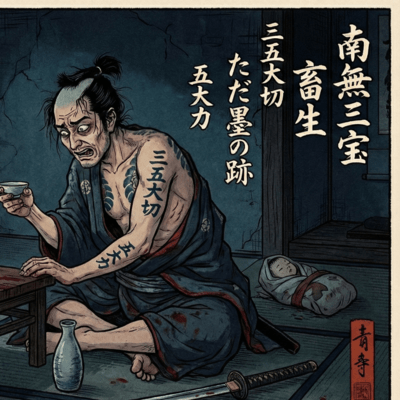 Fuwa Kazu, Loyal Retainer: Ink Traces, Sango, Moon-Wet Swallow, Head Banquet, Beast Sampling 8-1-0
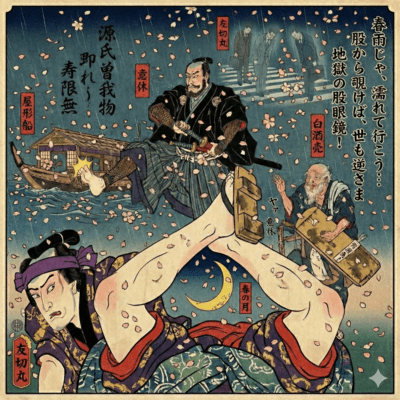 Ikyu's Reason, Era Cherry Blossoms, Soga Brothers, Hell's Crotch-Gaze Sampling 8-1-0
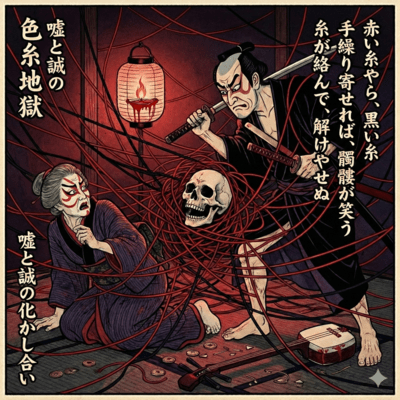 Heart's Mystery, Colored Threads, Hanzawa, Floating World Mechanism, The Moat Sampling 8-1-0
 Sumida Riverbank, Koshin Mound Scene, The Bean Bandits, Three Kichisas Sampling 8-1-0


Share this Page
SNS


Copy URL
https://linkco.re/MZVBHzBUCopy Embed Code
<iframe src=https://linkco.re/embed/MZVBHzBU width="300" height="600" frameborder="0"></iframe>