


Track List
※ Preview may take some time.
※ Preview is not available for songs under copyright collective.
Inspired by Wakatake Fuemie and Nakamura Akei's "The Origin of the Thirty-Sangen-do Temple Roof (Heitaro's Residence)" (1760)
Annotated by Kuroki Kanzo
Era
Historical Background: The play is set in the late Heian period, during the reign of Emperor Shirakawa and his cloistered rule.
Origination and Premiere: First performed at the Toyotakeza Theater on December 11, 1760 (the 10th year of the Horeki era).
Synopsis
Emperor Shirakawa was a former ascetic monk named "Renkaobo" who practiced asceticism in Kumano, and was reborn as the Cloistered Emperor thanks to his meritorious deeds.
However, the Cloistered Emperor suffered from headaches due to the skull of his previous life remaining lodged in the top of an old willow tree in Kumano.
Following a divine revelation, the willow tree was cut down to serve as the ridgepole of the new hall, and a skull was dedicated as an offering.
In fact, five years earlier, this willow tree had been saved from being cut down by a samurai named Yokosone Heitaro, who was on a pilgrimage to Kumano.
The willow tree's spirit took the form of a woman named Oyanagi, who betrothed him to Heitaro and even had a child with him named Midorimamaru.
When Oyanagi heard from the capital's magistrate, Kurando, that the willow tree would be cut down, she bid a sad farewell to her husband and child and disappeared with the sound of the tree being cut down.
Later, thieves Wada Shiro and his men broke into Heitaro's house, who suffered from night blindness, and murdered Heitaro's elderly mother.
However, thanks to the power of the skull left behind by Oyanagi, Heitaro's eyesight became clearer, and he successfully defeated the thieves.
At the end of the performance, Heitaro and Midorimaru lead the way, pulling a willow tree that has stopped moving while being transported to the capital, safely leading it to the capital.
Excerpts from the actual script
The origin of the Sanjusangendo ridgepole
Speaking of the sanshin.
The ichijiri (a string of strings) is passed down.
Ushikinaka's rebellion
To collect military funds.
Kashima Saburo Yoshitsune
He turns his head over to the depths of the pond.
Shiogama-himae Tamatsushima.
Singing the waka no ura nami ondo (song of the waka poems).
This is the shadow of the Ox King.
Suddenly his eyes become clear
Inoheyyoitona
Nurturing it, yoiyoitona
Gratitude, he draws it from his eyes
Logging slowly and steadily.
Logging the trees is also the knotted pine of Iwashiro
Artist Profile
Sampling 8-1-0
CORT RECORDS / sampling8-1-0 I am a beast. Updates will be a bit slow for a while. All revenue from this channel and other subscriptions will be donated to Weisser Ring. Its a group of people, but there are definitely some tracks where I am actually singing myself Bluuuuu. Only enjoy make Sound Making, Idea, Not all statements, but artworks. There are no plans for promotions or collaborations with anyone. This is a space for my hobbies. I apologize for not connecting it to other platforms, SNS. This does not represent my personal views or those of my workplace. All of them are demos, SSDs? Treasure that looks like trash and not complete packages, but it's up to everyone to listen and practice. The content here is created using programming or AI. However, we have deliberately narrowed the topics to those that are worth creating using DTM. Therefore, the revenue will be donated to the Weisser Ring and National Network Victim Support. The copyrights to these songs are centrally managed by a copyright management organization. For inquiries, please contact grooveon704@gmail.com (For more details, see the Unmanaged Works Ruling System (effective April 2026)) https://www.bunka.go.jp/seisaku/chosakuken/seidokaisetsu/chosakukensha_fumei/tyosakubutsu/index.html
Sampling 8-1-0の他のリリース
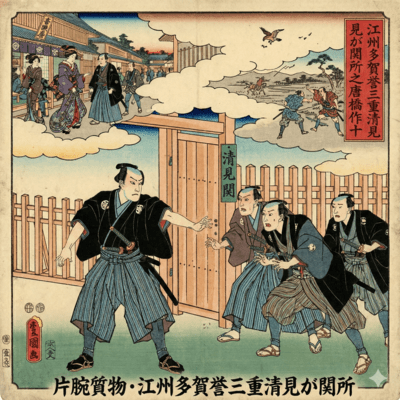 Goshu Tagahomare Mie Kiyomigasekisho No Karahashi Sakuju Sampling 8-1-0
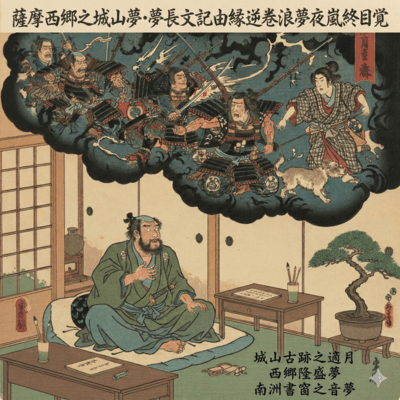 Satsuma Saigo No Shiroyama Yume Yume Chobunki Yuen Sakamakunami Yumenoyoarashi Owari Mezame Sampling 8-1-0
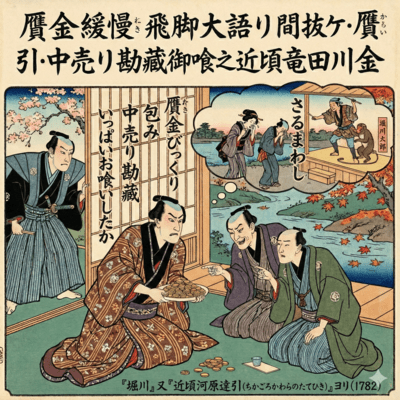 Nisegane Kanman Hikyaku Oogatari Manuke Nakauri Kanzo Okui No Chikagoro Tatsutagawa Hiki Sampling 8-1-0
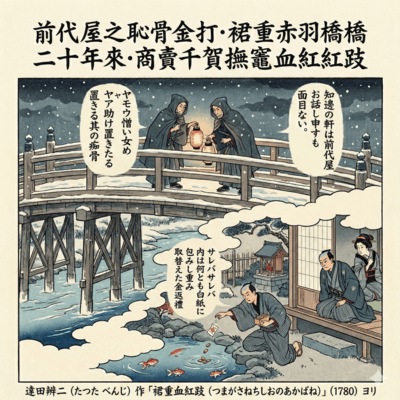 Zendaiya No Chikotsu Kinchou Tsumagasane Akabanebashi Nijunenrai Shoubai Chika Nadegama Chishio No Akabane Sampling 8-1-0


COAT RECORDS.
Share this Page
SNS


Copy URL
https://linkco.re/BBz3pSbDCopy Embed Code
<iframe src=https://linkco.re/embed/BBz3pSbD width="300" height="600" frameborder="0"></iframe>