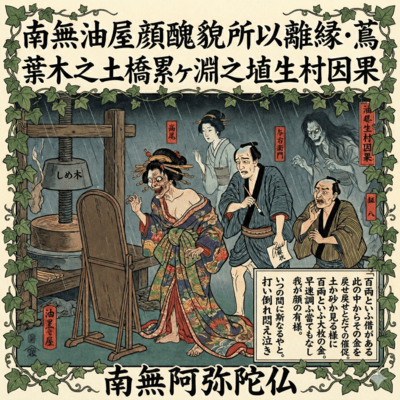
Namu Aburaya Kao Shubou Yuen Rien Tsutanohaki No Tsuchibashi Kasanegafuchi No Hanyumura Inga


Track List


※ Preview may take some time.
※ Preview is not available for songs under copyright collective.
Inspired by Tatsuta Benji, Yoshida Kigen, and Karatei Enma's "Meiboku Kasane Monogatari (The Tale of the Pond of the Pond of Hanyu Village)" (1790)
Namu Abura-ya: The Disfigured Face Leads to Divorce - The Ivy-Leafed Bridge, the Kasane-ga-fuchi of Hanyu Village, Karma
"The Tale of the Pond of the Pond of the Pond of the Pond of Hanyu Village" (Meiboku Kasane Monogatari) is a representative Bunraku and Kabuki play that combines the Edo period's Date Disturbance (a family feud) with the ghost story of "Kasane-ga-fuchi," a place haunted by a vengeful spirit. It is a tragic tale depicting the karma of the murder of the innocent Takao Tayu through the ugly transformation of the ghost of Kasane.
Key Features and Overview
Story Background: The story originated from a puppet theater piece, first performed at the Hizenza Theater in Edo in 1790, by collaboration between Tatsuta Benji, Yoshida Kigen, and Karatei Enma.
Synopsis: In order to ensure the safety of his lord, Ashikaga Yorikane (modeled after Date Tsunamune), Kinukawa Tanizo, obsessed with loyalty, murders the innocent Takao Tayu. Takao's spirit then possesses Tanizo's wife, Rui, and while expressing her terrible grudge, causes a number of strange occurrences.
Highlights: In scenes such as "Dobashi no Dan," Rui (played by Yoshida Kazuo) is transformed into an ugly figure, but the play also depicts the dignity he harbors and the tragedy of karma.
Portrayal of "Rui": A "gabu," a Bunraku head used to represent the transformation of a monster or a vengeful spirit, is used.
Artist Profile
Sampling 8-1-0
CORT RECORDS / sampling8-1-0 I am a beast. Updates will be a bit slow for a while. All revenue from this channel and other subscriptions will be donated to Weisser Ring. Its a group of people, but there are definitely some tracks where I am actually singing myself Bluuuuu. Only enjoy make Sound Making, Idea, Not all statements, but artworks. There are no plans for promotions or collaborations with anyone. This is a space for my hobbies. I apologize for not connecting it to other platforms, SNS. This does not represent my personal views or those of my workplace. All of them are demos, SSDs? Treasure that looks like trash and not complete packages, but it's up to everyone to listen and practice. The content here is created using programming or AI. However, we have deliberately narrowed the topics to those that are worth creating using DTM. Therefore, the revenue will be donated to the Weisser Ring and National Network Victim Support. The copyrights to these songs are centrally managed by a copyright management organization. For inquiries, please contact grooveon704@gmail.com (For more details, see the Unmanaged Works Ruling System (effective April 2026)) https://www.bunka.go.jp/seisaku/chosakuken/seidokaisetsu/chosakukensha_fumei/tyosakubutsu/index.html
Sampling 8-1-0の他のリリース
 Kiso Bouryaku Muhon Sesshiyakuwan Hisatsugu Doukoku Yuen Uchikubi No Kazuma Yamashironokuni Sampling 8-1-0
 Ritsuou No Saguribara Kichikubokuseki Ruritengu Midaregami Sampling 8-1-0
 Hibariyama No Iwanegozen Hakarigoto Yuen Taimadera Nureginu Yamatomusume No Shibari Oisutematsu Sampling 8-1-0
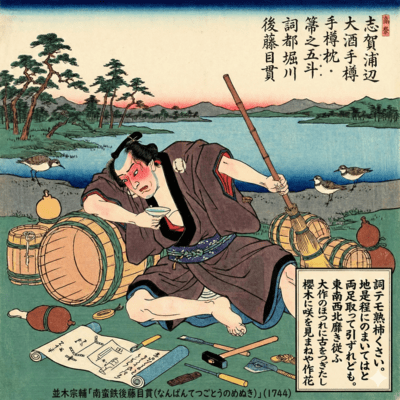 Shiga Urabe Oozake Tedaru Makura Houki No Goto Kotoba Miyako Horikawa Gotou Menuki Sampling 8-1-0


Share this Page
SNS


Copy URL
https://linkco.re/TS1maHH1Copy Embed Code
<iframe src=https://linkco.re/embed/TS1maHH1 width="300" height="600" frameborder="0"></iframe>