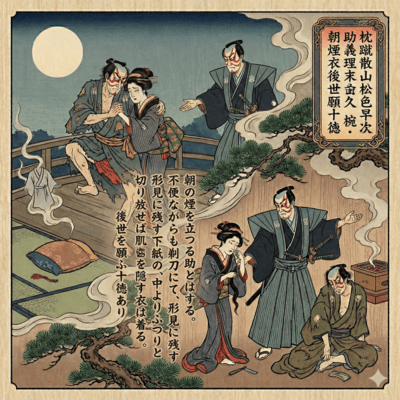
Kicking Pillows at Pine Mountain, Hayajiro's Dutiful Rescue of Wankyu / Morning Smoke, The Robe, and Prayers for the Afterlife


Track List


※ Preview may take some time.
※ Preview is not available for songs under copyright collective.
Inspired by Kikaine's "Wankyu Sue no Matsuyama" (1710), from the Taisho Kabuki play "Maboroshi Wankyu" (1925), written by Okamura Kakie.
"I am a servant who rises from the morning smoke. Though inconvenient, if I use a razor to cut a small piece from the center of the lining paper I'm leaving behind as a keepsake, I can wear a garment that covers my skin. This is a lifelong pursuit."
[Synopsis]
1. Wankyu's Debauchery and Confinement (Volume 1)
Wankyu falls in love with Matsuyama, a courtesan from Shinmachi, squandering the family's gold and silver.
His father, Kyuemon, and his assistant, Mataemon, take this seriously and try to remonstrate with Wankyu, but they refuse to listen, so they lock him in a "dashikiro" (private cell). Wankyu's mental health deteriorates as she struggles to cope with the pain of not being able to see Matsuyama and the disrespect he has shown her.
2. Matsuyama's Decision
Matsuyama learns that Wankyu has been disowned and imprisoned because of her.
She remains faithful to Wankyu, refuses to be swayed by other guests (such as Hayajiro Iro), and resolves to apologise to Wankyu by dying.
Matsuyama escapes from the brothel (or prepares to commit suicide) and attempts to find Wankyu.
3. Wankyu's Madness and Journey (Volume 2)
Having escaped (or perhaps been banished) from his prison cell, Wankyu loses his mind and wanders the streets in the shape of a "Tosaemon" (a beggar monk wearing a straw hat). He hallucinates Matsuyama and visions of people playing at teahouses, dancing madly (this is the famous scene known as "Wankyu's Madness"). He reunites with Matsuyama (or pursues a vision) around Shinmachi Bridge.
4. The Chivalrous Warrior, Iro Hayajiro
Matsuyama and Wankyu are about to commit suicide together, but then Iro Hayajiro, Matsuyama's customer, appears.
Although Hayajiro would normally consider Wankyu an "enemy" for stealing Matsuyama, his customer, he explains that "there are two things more important than life," and, moved by the two men's affection, he spares them or even helps them. (Note: Unlike Chikamatsu's "Wankyu," this work is notable for ending with the samurai Hayajiro's compassion.)
Artist Profile
Sampling 8-1-0
CORT RECORDS / sampling8-1-0 I am a beast. Updates will be a bit slow for a while. All revenue from this channel and other subscriptions will be donated to Weisser Ring. Its a group of people, but there are definitely some tracks where I am actually singing myself Bluuuuu. Only enjoy make Sound Making, Idea, Not all statements, but artworks. There are no plans for promotions or collaborations with anyone. This is a space for my hobbies. I apologize for not connecting it to other platforms, SNS. This does not represent my personal views or those of my workplace. All of them are demos, SSDs? Treasure that looks like trash and not complete packages, but it's up to everyone to listen and practice. The content here is created using programming or AI. However, we have deliberately narrowed the topics to those that are worth creating using DTM. Therefore, the revenue will be donated to the Weisser Ring and National Network Victim Support. The copyrights to these songs are centrally managed by a copyright management organization. For inquiries, please contact grooveon704@gmail.com (For more details, see the Unmanaged Works Ruling System (effective April 2026)) https://www.bunka.go.jp/seisaku/chosakuken/seidokaisetsu/chosakukensha_fumei/tyosakubutsu/index.html
Sampling 8-1-0の他のリリース
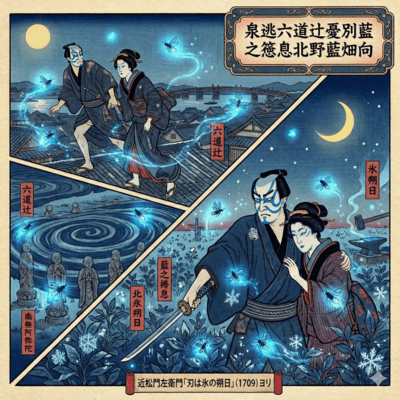 Izumi Nige Rokudo Tsuji Ukiwakare Ai no Mushiriiki Kitano Aibatake Mukau Koori no Tsuitachi Sampling 8-1-0
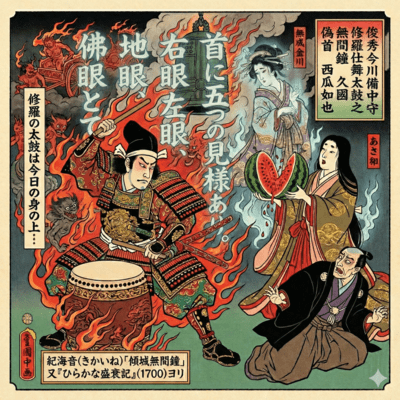 Toshihide Imagawa Bitchu-no-kami Gozen Shura Shimai-daiko Mugen no Kane Hisakuni Nisekubi Suika no Gotoki Nari Sampling 8-1-0
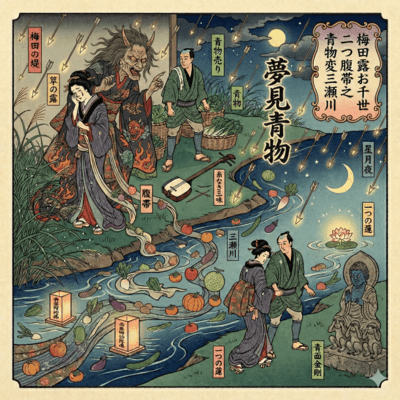 Umeda Dew: Ochiyo's Twin Belts & The Greengrocer's Sanzu River Variation Sampling 8-1-0
 Katsura Kata Usuzumi No Idama Shinju Tsukushi Tanomo Koorogi Kari No Namidagawa Sampling 8-1-0


Share this Page
SNS


Copy URL
https://linkco.re/zqY76TSHCopy Embed Code
<iframe src=https://linkco.re/embed/zqY76TSH width="300" height="600" frameborder="0"></iframe>